
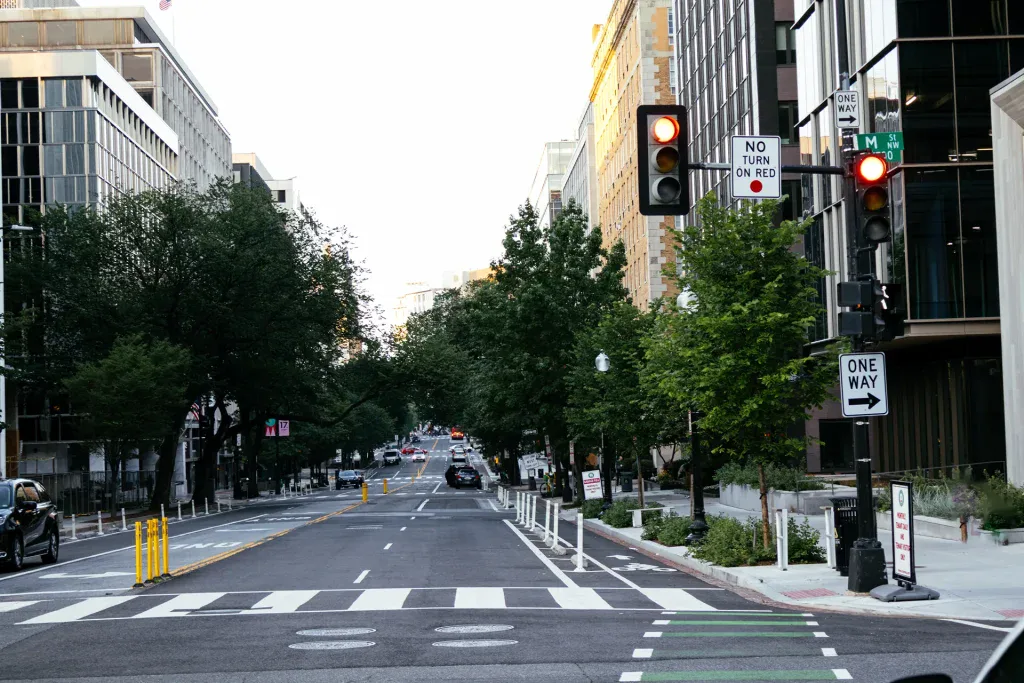
Bicycle detection at traffic signals helps you provide responsive intersection operations. At an actuated signal, a bicycle needs to register a demand just as a motor vehicle does. Reliable detection connects that demand to the controller, while appropriate timing and signal displays determine how the bicycle movement is served.
Why A Traffic Signal May Miss A Bicycle
A detection system configured around motor vehicles may not reliably recognize someone waiting on a bicycle. The problem might involve sensor sensitivity, detection-zone placement, equipment condition, or the way the detector input reaches the controller.
A cyclist waiting outside the configured zone may remain undetected even when the equipment is functioning. Before replacing hardware, review the complete process from the bicycle’s waiting position to the controller’s response. A missed green isn’t always a sensor failure.
Compare Bicycle Detection Technologies
The Institute of Transportation Engineers identifies inductive loops, video, microwave radar, and push buttons as bicycle detection options. Each has different installation and maintenance considerations.
Select the technology around your intersection geometry, operating objectives, and ability to maintain dependable coverage.
- Inductive loops detect changes in an electromagnetic field.
- Video systems analyze camera images within configured detection zones.
- Radar systems use reflected signals to detect road users.
- Push buttons let cyclists actively request service.
Place Detection Where Cyclists Actually Wait
Your detection layout should match the bicycle approach, stopping position, and intended movement. Review bike lanes, shared lanes, and any designated waiting areas rather than assuming the motor-vehicle detection layout covers every bicycle position.
Protected lanes may place cyclists outside existing zones.
- Cover the intended stopping area near the bicycle stop line.
- Evaluate waiting positions within bike boxes.
- Review detection needs at two-stage turn waiting areas.
- Account for cyclists making permitted turns from shared lanes.
- Keep any bicycle push button reachable from the intended waiting position.
Check Loop Configuration & Sensitivity
Inductive loops don’t detect bicycles by weight. Their performance depends on factors such as loop geometry, placement, detector settings, and the bicycle’s position relative to the loop.
If your installation uses loops, verify that they detect bicycles without creating unacceptable calls from adjacent traffic. Appropriate pavement markings help riders identify the intended waiting position.
Inspect the loop and associated equipment when resurfacing, utility work, or pavement deterioration affects the installation.
Evaluate Above-Ground Detection Under Site Conditions
Video and radar offer detection options without installing loop wires in the pavement. Their suitability still depends on the selected equipment, mounting location, configuration, and coverage requirements.
Evaluate video performance during low-angle sunlight, nighttime operation, and changing visibility. Check whether vehicles or roadside equipment obstruct the view. Where classification matters, confirm that the proposed system distinguishes bicycles from other users rather than assuming that every detection product provides the same capability.
Test More Than A Bicycle Passing Through
A system may detect a moving cyclist but lose the call when the rider stops. Acceptance testing should reflect how people approach, wait, and move through your intersection. Include both missed detections and false calls in the review.
- Test a single cyclist arriving without a motor vehicle nearby.
- Confirm detection while the cyclist remains stationary.
- Check different bicycle positions within the intended waiting area.
- Observe performance when several cyclists queue together.
- Verify that adjacent traffic doesn’t create an incorrect bicycle call.
Connect Detection To Appropriate Signal Timing
Registering a bicycle is only useful if the controller responds as intended. Your configuration needs to associate the input with the correct movement and provide timing appropriate to the crossing. Bicycles have different acceleration and travel characteristics from motor vehicles. Review starting conditions, crossing distance, grade, and the applicable timing requirements.
Advance detection may support an extension where the system is designed for it, but detection alone doesn’t establish adequate clearance time.
Coordinate Detection With A Protected Intersection
At a protected intersection, physical separation changes where cyclists approach and wait. Corner islands, setback crossings, and separated approaches need to work with the detection layout and signal operation.
A protected bike intersection also requires attention to turning conflicts. Detection identifies demand; it doesn’t independently resolve a conflict between a bicycle crossing and a vehicle turn. Review the geometry, permitted movements, and phasing together.
- Match detection zones to the separated bicycle approach.
- Confirm that waiting cyclists remain visible to the system.
- Review turning movements that cross the bicycle path.
- Coordinate bicycle service with pedestrian crossing operations.
- Recheck coverage when islands, markings, or lane arrangements change.
Monitor Performance After Installation
Initial acceptance doesn’t establish permanent reliability. Camera movement, vegetation, construction, pavement changes, or revised controller settings may affect performance. Include bicycle detection in your inspection program and investigate reports that a bike signal isn’t responding.
- Compare observed bicycle arrivals with detector calls.
- Review unusually long waits and repeated missed service.
- Inspect sensor alignment and physical obstructions.
- Confirm controller inputs after maintenance or timing changes.
- Retest after roadway work alters the bicycle approach.
Build A Detection Plan Around Your Intersection
Sierra Transportation Technologies provides video detection solutions and intersection technology for transportation agencies, including systems designed to detect bicycles, vehicles, and pedestrians. Our team helps you evaluate equipment, integration, installation, and ongoing support.
Contact us to discuss your bicycle detection project and identify a configuration that supports your intersection layout and operating objectives.