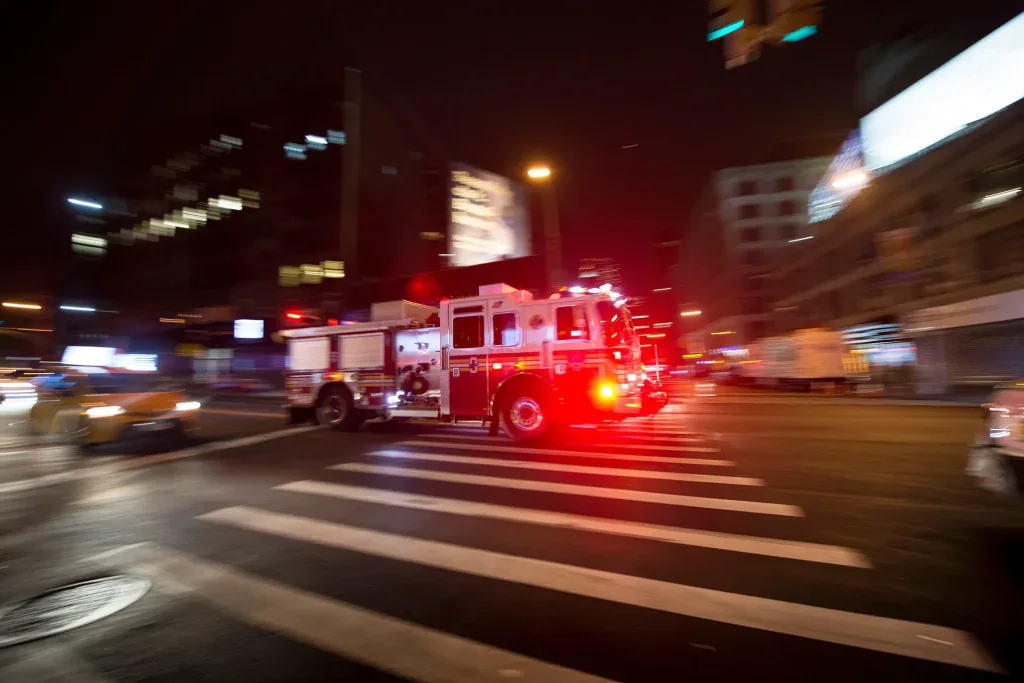
Emergency vehicle preemption allows authorized police, fire, and EMS vehicles to request special traffic signal operation as they approach an intersection. These systems depend on several components working together every time a request is made, including vehicle equipment, communications, intersection hardware, and the signal controller.
For transportation agencies, troubleshooting EVP requires looking at the complete system rather than assuming the traffic signal preemption device itself has failed. A problem anywhere along the request path can prevent the intersection from responding as intended.
Start By Identifying Where The Preemption Request Stops
A basic EVP system includes equipment on the emergency vehicle, a method of communicating with the intersection, detection or receiving equipment, and the traffic signal controller. Depending on the system, agencies may use optical, radio, GPS-based, or other communication technologies.
When preemption fails, determine how far the request travels through that chain. If the vehicle sends a valid request but the intersection never receives it, the problem differs from a request that reaches the cabinet but doesn’t produce the expected signal response.
Check The Traffic Signal Preemption Transmitter
The vehicle-side traffic signal preemption transmitter should be one of the first components you check when a problem affects only one emergency vehicle.
A transmitter can appear operational while failing to communicate reliably because of power, wiring, configuration, mounting, or communication problems. Compare the affected vehicle with other equipped vehicles approaching the same intersections.
- Confirm The Transmitter Has Power
- Check Wiring & Connections
- Verify The Correct Operating Mode
- Inspect Antenna Or Emitter Placement
- Confirm Vehicle Identification & Configuration
- Test The Vehicle At Multiple Equipped Intersections
Determine Whether The Problem Follows The Vehicle Or Intersection
Testing across multiple locations can quickly narrow the problem. If one ambulance can change traffic lights at most equipped intersections but repeatedly fails at one location, the intersection becomes the stronger troubleshooting lead. If the same vehicle fails across several intersections while other emergency vehicles operate normally, focus on the vehicle-side equipment.
This comparison can prevent technicians from spending time adjusting intersection hardware when the actual failure sits elsewhere in the system.
Inspect Detection & Receiving Equipment At The Intersection
The intersection needs to recognize the incoming preemption request before the controller can act on it. Detection equipment can vary by EVP technology, but problems with receivers, detectors, antennas, cabling, connections, or field configuration can interrupt that process.
Field technicians should confirm that the intersection receives and processes the expected input. Historical or current fault indications can also help identify intermittent problems that may not appear during a single test.
- Inspect Detectors, Receivers & Antennas
- Check Field Wiring & Connections
- Verify Inputs Reach The Controller
- Review Available Fault Indicators
- Test Multiple Approaches
- Confirm Detection Range & Coverage
Check Communications Between System Components
Modern emergency vehicle preemption can depend on communications between vehicles, intersections, central systems, or cloud-based platforms. A failure anywhere along that path can delay or prevent a preemption request.
Loss of network connectivity, incorrect addressing, configuration changes, or communications hardware problems can create failures even when the traffic signal controller itself remains fully operational.
For network-based systems, diagnostic data can help determine whether requests reached the intersection and how the system responded.
Review The Traffic Signal Controller Configuration
Receiving a valid request doesn’t guarantee the signal will execute the intended sequence. The controller still needs the correct configuration for the requested preemption input.
Check the programmed preemption sequence, phase assignments, clearance intervals, and related controller settings. Configuration changes made during signal timing updates or other intersection work can affect EVP operation if technicians don’t verify the preemption functions afterward.
Testing should confirm both that the controller recognizes the request and that the intersection follows the intended sequence.
Look For Conflicts Between Multiple Priority Functions
Many intersections support more than one special traffic function. Emergency vehicle preemption may operate alongside traffic signal priority, railroad or light-rail preemption, pedestrian operations, coordination plans, and other controller functions.
These functions don’t all have the same priority. Emergency vehicle preemption typically interrupts normal signal operation, while transit signal priority generally modifies timing without fully taking the controller out of coordinated operation.
Light rail vehicles can interrupt traffic signals where rail preemption applies, while other transit applications may use priority to reduce delays. Agencies should test how the controller handles competing requests rather than evaluating each function only in isolation.
Check Cabinet Power & Physical Connections
An EVP problem may originate with basic infrastructure rather than the preemption technology itself. Loose connections, damaged wiring, power problems, or changes inside the traffic signal cabinet can disrupt inputs between field equipment and the controller.
Cabinet inspections become particularly important after maintenance, construction, equipment replacement, or other work at the intersection.
Watch For Intermittent Failures
Intermittent failures can be harder to diagnose than a complete outage. The system may operate correctly during a technician’s test but fail under certain approaches, vehicle positions, communication conditions, or traffic scenarios. System logs and repeated field testing can help identify patterns.
- Which Vehicles Experience The Failure
- Which Intersections Are Affected
- Which Approach The Vehicle Uses
- Time & Date Of Each Failure
- Whether The Controller Received The Request
- Whether Other Priority Requests Were Active
- Recent Equipment Or Configuration Changes
Retest The Complete Sequence After Repairs
Repairing one component doesn’t confirm that the entire system works correctly. After correcting a transmitter, detector, communications, or controller issue, test the preemption sequence from the approaching vehicle through the final traffic signal response.
Testing should verify that the intersection detects the correct vehicle, executes the intended preemption sequence, and returns to normal operation as designed.
Build Maintenance Around The Entire System
Reliable emergency vehicle preemption depends on more than a single traffic signal preemption device. Vehicle transmitters, detection equipment, communications, controllers, wiring, and software configurations all contribute to the final signal response.
Sierra Transportation Technologies supports public safety agencies and transportation departments with emergency vehicle preemption, traffic signal priority, installation, training, and technical support. For agencies throughout the Western United States, a system-wide approach to emergency vehicle preemption maintenance can help identify failures faster and keep priority infrastructure operating as intended.