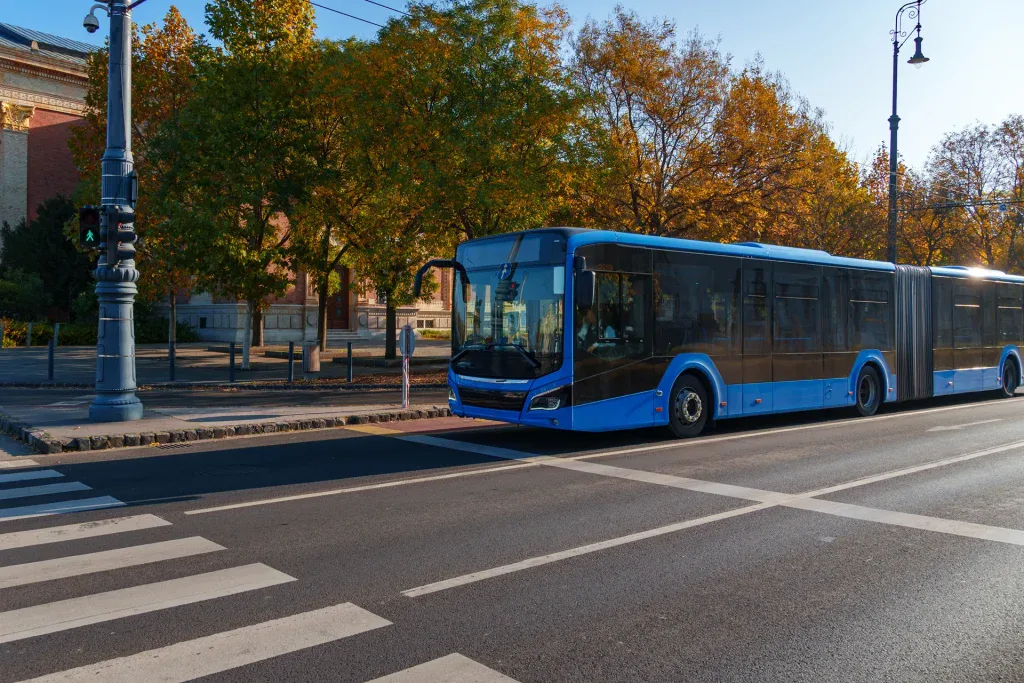
Queue jump signals help buses move through congested intersections without waiting behind the entire line of general traffic. By pairing a short priority lane with a controlled head start, your agency gives transit vehicles a way past a recurring bottleneck.
The benefit depends on more than the signal itself. Lane access, bus detection, stop placement, and controller operation all influence whether the treatment improves service.
What A Queue Jump Signal Does
A queue jump signal provides a bus with an advance movement before adjacent traffic receives its normal green. The bus uses a short approach lane to bypass waiting vehicles, then proceeds through the intersection toward a receiving lane or a designed merge.
The Federal Transit Administration describes a queue jump as a short bus lane combined with signal priority. Depending on the layout, a separate bus signal may control the movement. The lane and signal work together; timing alone doesn’t give a bus access past a blocked queue.
Give Buses A More Predictable Departure
A bus delayed at an intersection loses more than travel time. An unpredictable departure affects arrival at later stops and makes the route harder to operate consistently.
A bus queue jump addresses that specific source of delay. Instead of waiting for every vehicle ahead to discharge, the bus reaches the intersection through the priority approach and receives a controlled opportunity to proceed.
This treatment is most useful where intersection queues repeatedly disrupt service. It won’t resolve unrelated delays from boarding, incidents, or congestion farther along the route.
Queue Jumps & Transit Signal Priority
Transit signal priority is the broader strategy of adjusting signals to assist transit vehicles. Common treatments extend an existing green or provide an earlier green when a bus approaches.
A queue jump adds a physical bypass and a movement that lets the bus advance ahead of adjacent traffic. The treatments may operate together within the same corridor.
Priority also doesn’t mean every bus receives immediate service. Your agency may apply conditions, such as schedule adherence, while the controller manages other intersection demands. The operating policy should match the transit objective.
Keep The Priority Lane Accessible
A bus priority lane has little value if the bus cannot enter it. Long queues, turning vehicles, deliveries, or an obstructed curb lane may prevent access before the signal provides the advance movement.
Review the lane under actual operating conditions, including the busiest periods. A shared turn lane requires particular attention because turning traffic may occupy the space the bus needs.
- Queue lengths relative to the lane entrance.
- Right-turn demand and available storage.
- Curbside activity that blocks bus access.
- Lane markings and permitted movements.
- Space for the bus to continue or merge downstream.
Coordinate Bus Stops With The Signal
Stop placement influences whether the bus is ready when its priority opportunity arrives. A near-side stop introduces boarding time before the intersection, making arrival at the signal harder to predict.
Far-side stops often support queue jump operation by allowing the bus to clear the intersection before boarding. However, the receiving area still needs enough space for the bus to stop without creating another blockage.
Evaluate stop location with the lane and timing plan. Passenger access, pedestrian crossings, and downstream traffic conditions belong in that review. Moving delay across the intersection isn’t the same as reducing it.
Make Detection & Controller Logic Work Together
The signal controller needs information that supports the intended bus movement. Depending on the design, that may come from roadside detection, vehicle communications, or a combination of inputs.
Detection should indicate that the bus is positioned to use the treatment. A request issued while the bus is still boarding or unable to reach the lane may produce an ineffective priority interval.
Define the operating sequence before selecting equipment.
- Where the bus is detected, and its request begins.
- Conditions that qualify the bus for priority.
- How the controller serves the advance movement.
- How the request clears after the bus passes.
- What happens if detection or communication fails.
Protect Other Intersection Movements
A queue jump introduces a distinct bus movement into an existing intersection. Your design must account for conflicting turns, pedestrians, cyclists, and the transition back to normal operation.
The bus signal should clearly communicate which movement it controls. Signal placement and visibility matter because an indication intended for buses must not encourage an incorrect response from other drivers.
Plan The Technology As A Complete System
A queue jump project connects field equipment, controller software, detection, and agency operating rules. Compatibility between those elements matters as much as the capabilities of an individual device.
Your traffic engineering and transit teams should establish responsibilities for configuration, testing, maintenance, and performance review. That gives your agency a workable process for addressing issues after deployment.
- Controller and cabinet compatibility.
- Detection coverage and communication interfaces.
- Configuration documentation and acceptance testing.
- Staff training and maintenance access.
- Data needed to review ongoing performance.
Review The Equipment For Your Corridor
Queue jump signals improve bus operations when the lane arrangement and technology support a usable, well-timed movement. Start with the location’s delay problem, then define the equipment and operating requirements around it.
Sierra Transportation Technologies supplies traffic signal controllers, detection technology, and transit signal priority solutions, supported by technical assistance and training. Contact us to discuss your corridor’s controller, detection, and integration needs for a bus priority project.